EU Free Shipping on orders over 89,90€ at the Checkout/ Spedizione gratuita per ordini superiori a 49,90€ al Checkout
Antidote - The Truth PRE-ORDER
21,90 €
Vinyl, LP, Album The Truth is the band's first (and best) album, originally released on 1992 .
In stock
Product Details
UPC: 8019991895740
Label: Minotauro Records
RELEASE DATE NOVEMBER 6
Superb progressive thrash from Finland. Featuring Mika Arnkil (Impaled Nazarene) (Abhorrence) and Nino Laurenne (Black Sun) (Thunderstone)
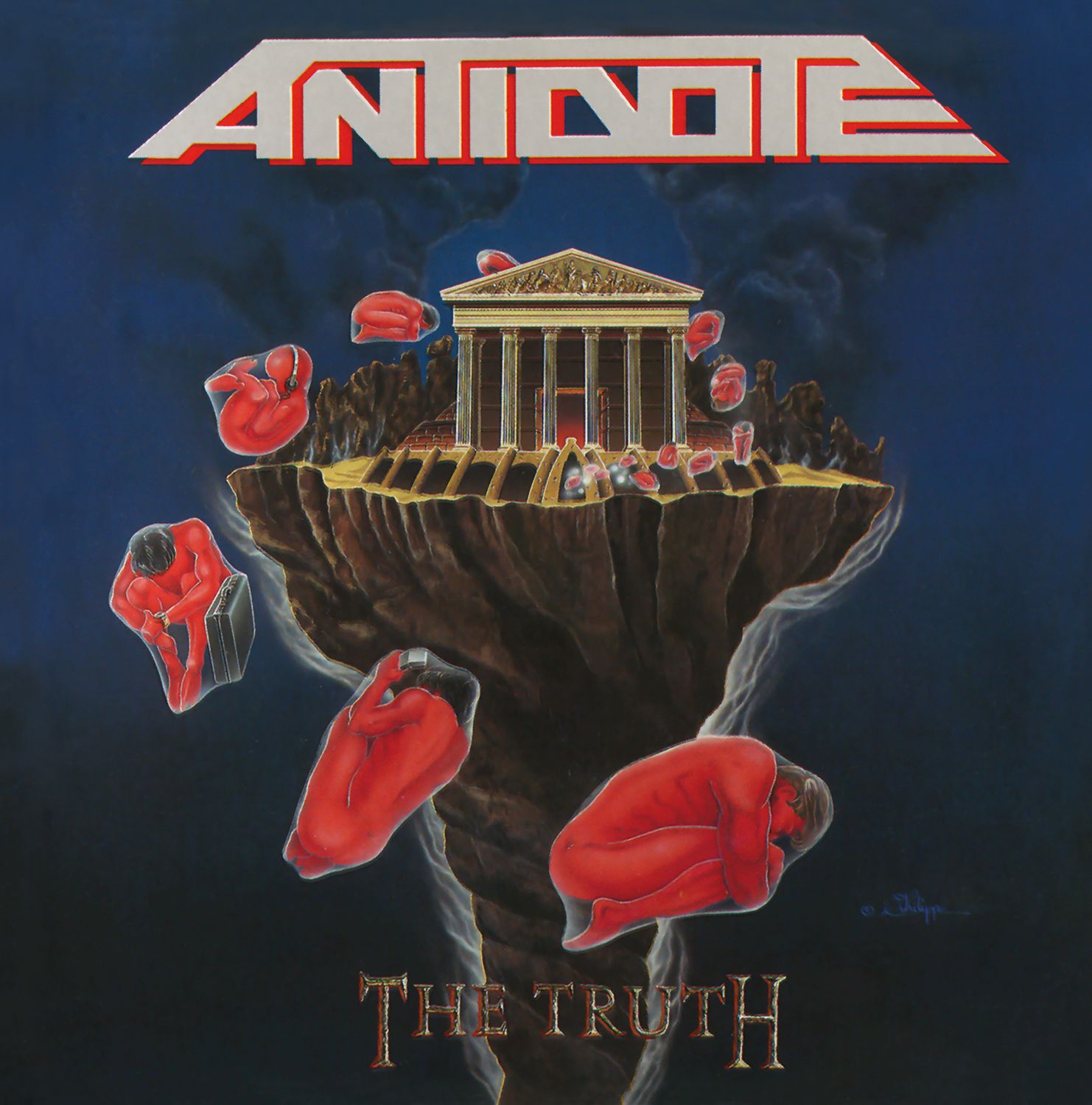
.By 1992, thrash had lost much of its audience. Pantera-style “modernization” and the rise of grunge sent many fans elsewhere, and bands that kept going often tried funk, hardcore, or death metal to stay afloat. Still, some worthwhile thrash got released during this period, and The Truth, the debut of Finland’s Antidote, is one of the best examples. The band had formed around 1986 and reached the shelves through Shark Records just after the genre’s peak. The mysterious, X-Files-like cover hides music that is easy to place, and it sounds closer to 1988 than 1992.
The production is harsh, ominous, and heavy. The guitar tone is big and forceful, and of Antidote’s three albums this is the one that sounds best today, better than fellow Finns A.R.G. or Airdash. The Teutonic influence is strong, with Destruction the closest reference. The technical, nuanced songwriting points to the Bay Area, above all to Testament, and there are echoes of Artillery, Dark Angel, and compatriots Stone. The band was clearly still finding its sound, and there are occasional bursts of progressive and even death metal ideas.
Nino Laurenne’s vocals are the album’s most distinctive feature. He moves between a high, shrieking rasp, with Chuck Billy-style howls, and a low growl that sometimes crosses into death metal. He is wild and infectious here, and bassist Pete Peltonen is just as audible, with loud, popping lines that give the arrangements extra color.
The nine tracks are dynamic and richly detailed. “Symphony of Death” opens with howling wind, a tolling bell, a monstrous growl, and dissonant orchestral sounds, then turns unexpectedly with a free-jazz-style bass intro before settling into a roaring, slower groove with fun, wild leads. “Within His Power” begins with rolling muted riffs and a chorused clean guitar before charging into Destruction-like riffing. “Act of Violence” starts with a depressive acoustic passage that leads into some of the most energetic riffs on the record. “Melancholia” is probably the peak, with a pair of flowing speed riffs and a restrained, excellent verse. “3rd Time in Greenland” leans progressive, with frequent tempo changes and catchy late leads. It is the weakest track for one reviewer, but “Rosemachine” makes up for it with a bluesy groove that gathers speed and splits into several strong riffs. “Grandiloquent Passaway” is dark and morose, with a Testament-like chorus and many shifts of feel. “Subordinated People” is built on mute-picked melodies, and “Spaced Out” closes the album with thrumming bass, pounding thrash, and a Slayer-like final riff. The songs are packed with riffs, and the instrumental stretches between vocal lines are so elaborate that the album sometimes sounds like thrash’s version of a jam band.
Released in 1989, The Truth would have stood out as thrash moved into new territory while still in the spotlight. In 1992 it came too late and sold too little for Antidote to continue in this style. It is darker and more intense than what Depressive Age was attempting on its debut from the same period, and too elaborate to compare directly with the German classics that influenced it.
Fans of 1987–88 Testament, Artillery, and Dark Angel will find a lot to like, especially if they don’t mind a darker sound and a few rhythmic twists. It should also appeal to listeners of Lääz Rockit, Stone, Metal Church, and Reverend. Only those who find anything harsher or more dissonant than Metallica too much are likely to be put off. It sounds good today and deserves minor cult status. Thrash still had a lot to say in 1992 before it was pushed out of the spotlight.
Save this product for later
Have questions?
Antidote - The Truth PRE-ORDER
Display prices in:EUR
